our work
What we do
The overall goal of NAMPAN is to help individual MPA managers, practitioners and experts be more effective by creating a community of practice where they can consider common issues and challenges and share information and best practices.
We take a three-pronged approach to our work:
 |
WORK AREA 1: CAPACITY BUILDINGNAMPAN organizes virtual ‘deep dives’ or workshops on critical issues to connect MPA practitioners on shared topics of interest across wide geographic areas. Topics for capacity building activities were identified during a series of consultations that took place in 2020 to identify common challenges and solutions, including those that require cross-border collaboration. Over 200 MPA managers and practitioners participated in the consultations. More information on past deep dives is available here. NAMPAN will also work with partners to identify other opportunities to build the capacity of MPA practitioners, including through workshops, conferences, side events, training, etc. |
|
|
WORK AREA 2: CONNECTNAMPAN’s website and mailing list provide multilingual platforms that connect MPA practitioners together as a virtual community of practice. This platform provides a space for MPA managers or practitioners to share information, acts as a repository for insights and lessons learned, and facilitates collaboration across jurisdictions by helping identify common issues and joint actions. If you are an official North American MPA manager or practitioner, you can join here. |

 |
|
our work
Resources
Since 1999, NAMPAN has developed reports, tools, workshops and maps to enhance and strengthen biodiversity conservation in critical marine habitats and facilitate information exchange among experts.
Communication
NAMPAN develops communication materials in the three NAMPAN working languages (English, French and Spanish) to represent the network in different events. MPA managers and practitioners are also encouraged to have a role as representatives of NAMPAN when participating in external groups.
NAMPAN Flyer
Why are MPA networks important?
NAMPAN has created a series of key messages for MPA practitioners, and for Partners and the General Public. The goal is to raise awareness and communicate the relevance and importance of marine protected areas and their ecosystem services.
Story Map
How NAMPAN is promoting human and ecological connectivity for MPAs
Marine Protected Areas (MPAs) managers and practitioners often work together through MPA networks to enhance ecological connectivity. Explore this story map to learn more about this concept and see practical examples on how NAMPAN is strengthening connectivity throughout North America to conserve large areas distributed along a coast or in the ocean that have similar ecological communities or challenges.
Read More
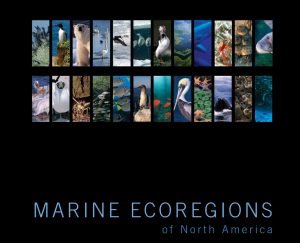
In 2002, CEC convened a trinational group of marine scientists to agree on a new, unified, ecological classification for oceanic and coastal regions. This resulted in the Level I marine ecoregions map (2009) showing the 24 marine ecoregions in North America classified by geographical, oceanographical, physiological and biological information, including distinct assemblages of species. Maps for Level II and Level III ecoregions were also developed.
In the book Marine Ecoregions of North America (2019), each ecoregion is briefly described, with a summary of key physical, oceanographic, and biological characteristics, as well as the principal human activities and impacts. For each ecoregion, a brief fact sheet gives the rationale for its classification, its surface area, sea surface temperature, major currents, physiography, depths, substrate type, major community types, productivity, species at risk and human activities. The book is available in English, French and Spanish.
Read More
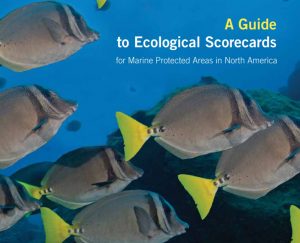
Based on the work of MPA programs in the three countries, NAMPAN and CEC developed a guide and standardized format for Marine Ecological Scorecards for MPAs in North America. This guide, available in English, French and Spanish, is an introduction to the use of marine ecological scorecards and condition reports, which are tools for assessing the condition of marine protected areas in North America.
Read More
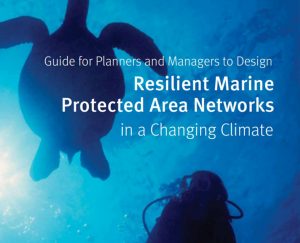
Climate change, along with pollution and overfishing, is one of the great challenges facing North America’s shared oceans today. Through the project Engaging Communities to Conserve Marine Biodiversity, NAMPAN and CEC developed the Guide for Planners and Managers to Design Resilient Marine Protected Area Networks in a Changing Climate (2012), to improve the design and management process for healthier, more resilient oceans.
Protecting and conserving North America’s shared oceans contributes to global restoration efforts. The UN Decade on Ecosystem Restoration launched in 2021 as a global rallying cry for the protection and revival of ecosystems all around the world, including oceans and coasts. The Principles of Ecosystem Restoration to Guide the UN Decade presents best-practice principles that detail the essential tenets of ecosystem restoration that should be followed to maximize net gain for native biodiversity, ecosystem health and integrity, and human health and well-being, across all biomes, sectors and regions.
NAMPAN Deep Dives on Ecological Connectivity
Quick Links:
- Video: First Deep Dive on Ecological Connectivity (subtitles in English, French and Spanish)
- Summary report of first Deep Dive
- Video: Second Deep Dive on Ecological Connectivity
- Summary report of second Deep Dive
Read More
As part of ongoing network activities, the North American Marine Protected Areas Network (NAMPAN) hosted two Deep Dives on Ecological Connectivity in April and October 2021.
The April 90-minute event brought together 101 participants from across Canada, Mexico, and the United States to hear from experts and discuss current efforts and opportunities for collaboration. The event opened with a panel among cross-sector experts:
- Andrew Rhodes Espinoza, Biodiversity and Oceans Coordinator, Ministry of Foreign Affairs of México. IUCN WCPA Member and Member of the WCPA Connectivity Conservation Specialist Group (CCSG) (Moderator)
- Anna Metaxas, Professor, Dalhousie University. Member of the Canadian Healthy Oceans Network and Member of the IUCN WCPA CCSG Marine Connectivity Working Group
- Ben Haskell, Deputy Superintendent, Stellwagen National Marine Sanctuary
- Jorge Torre, Executive Director, COBI (Comunidad y Biodiversidad)
Following the April event, a 150-minute event in October brought together 89 participants from the three countries to hear from experts and discuss current efforts and opportunities for collaboration across MPAs. The event opened with a panel among cross-sector experts:
- Barbara Lausche, Director of the Marine Policy Institute; Lead Author of IUCN Rules of Thumb on Marine Connectivity
- Eduardo Ponce, Director of Species at Risk and Species Conservation Programs, Comisión Nacional de Áreas Naturales Protegidas (CONANP)
-
Fred Whoriskey, Executive Director, Ocean Tracking Network
From the Canadian Arctic to the southern tip of Mexico, North America is home to an extensive network of Marine Protected Areas. These videos shed light on the vital role MPAs play in sustaining communities, providing recreational experiences, serving as living laboratories, and in conserving important species and their habitats.